
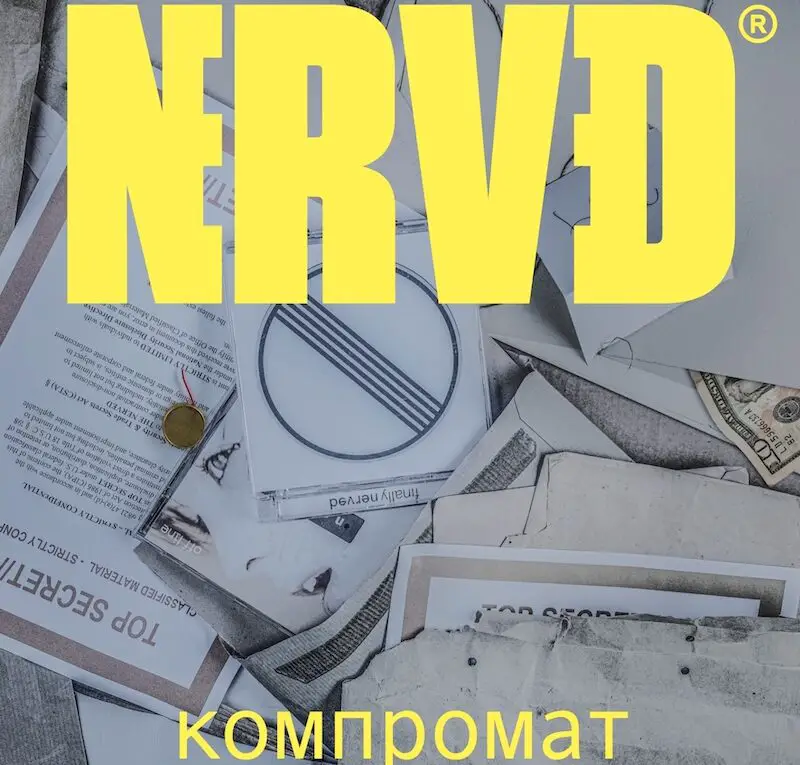
REVIEW: NERVED – ‘Kompromat’
There’s something inherently bold about revisiting your own catalogue just to dismantle it. For NERVED, ‘Kompromat’ arrives as a project that questions what their music was versus what it could have been. In doing so, they step into a space that feels more like reinvention.
At its core, ‘Kompromat’ thrives on tension. The idea of revisiting past material through the lens of control, perspective, and reconstruction gives the album a weight that extends beyond its sound. It’s about recontextualisation, as each track feels like it has been pulled apart and carefully rebuilt with sharper edges and a clearer sense of purpose.
Musically, the record leans into a dynamic interplay between rigidity and expansiveness. Mechanical rhythms and tightly wound guitar work provide a solid foundation, while layers of electronics, orchestral elements, and choral arrangements stretch the sound into something more cinematic. It’s this contrast that defines the listening experience, as moments of density giving way to space, precision balanced with atmosphere.
The presence of collaborators adds further dimension, but importantly, they never feel ornamental. Contributions from artists such as Zak Tell and Richard Sjunnesson are woven into the structure of the songs themselves, reshaping their identity throughout. Each voice introduces a different tone and perspective, reinforcing the album’s central theme of reinterpretation.
What also stands out is the pacing. The inclusion of shorter, more ambient passages allows the record to breathe, creating a sense of movement that goes beyond individual tracks. These moments enhance its flow, offering space for reflection before the next shift in intensity.
In many ways, ‘Kompromat’ exists between two states. It is neither entirely new nor purely retrospective, but something more nuanced. A parallel version of the band’s past, where earlier ideas are given the scale and clarity they may have originally lacked. That balance is not easy to achieve, but NERVED handle it with a measured confidence.
Rather than relying on the weight of their history, they reshape it by turning familiar material into something more cohesive, more deliberate, and ultimately more aligned with their vision. ‘Kompromat’ offers a compelling reminder that evolution isn’t always about moving forward. Sometimes, it’s about going back and doing it differently.